A Conversation with
Margo Jefferson
On Negroland, the black bourgeoisie, and the cost of privilege — a meditation on race, power, and what it means to chronicle a world that does not advertise itself.
I'm a chronicler. I'm a dissenter. I'm an admirer. I'm a critic. I'm an exile. I'm a member. I wanted to use all my writer's tools to bring that world and all its complications and contradictions to life.
— Margo Jefferson
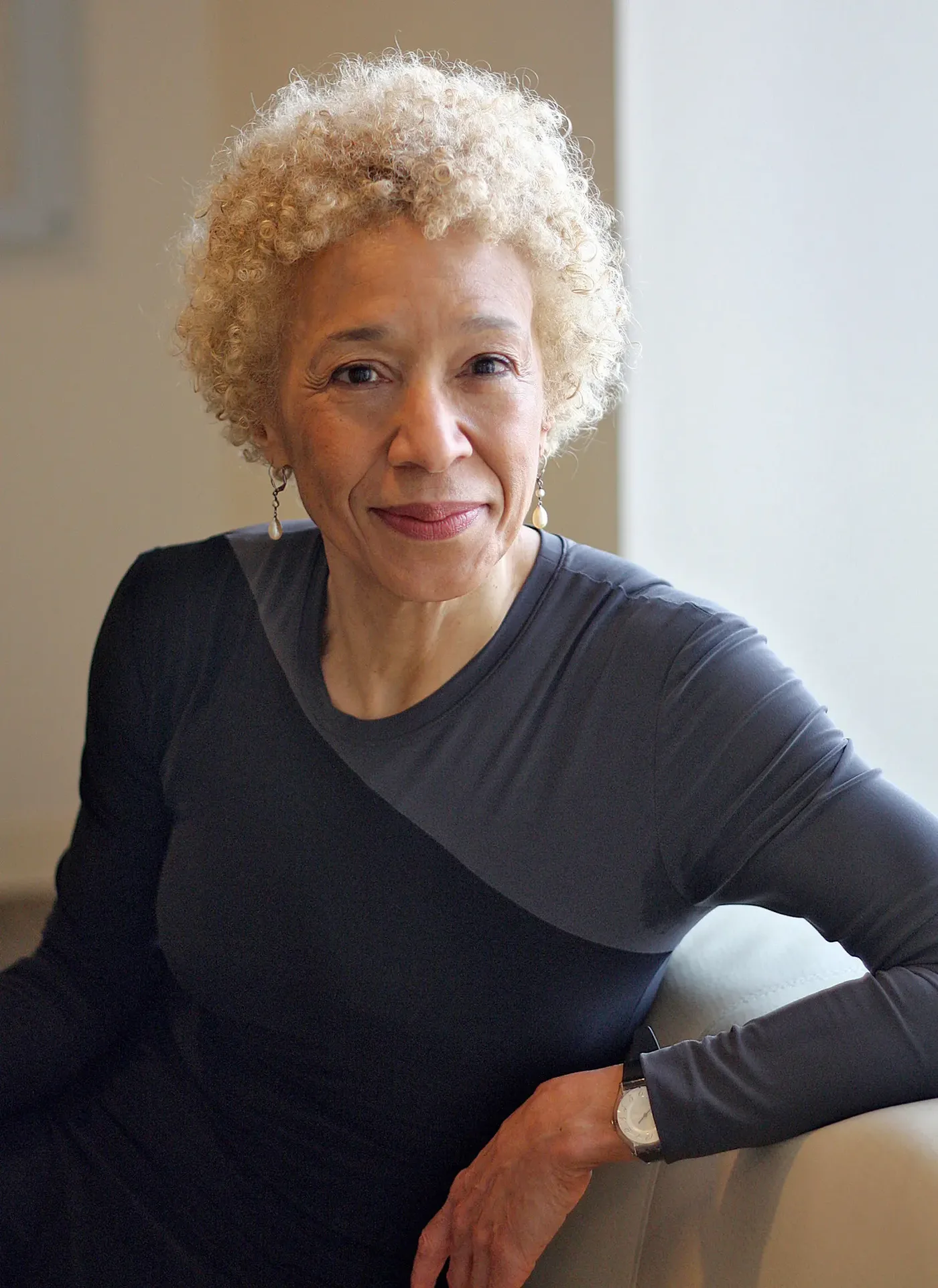
Photo · Michael Lionstar
Subject
Margo Jefferson
Pulitzer Prize · National Book Critics Circle Award
Columbia University School of the Arts
Margo Jefferson's memoir Negroland chronicles her experience growing up as a member of the black bourgeoisie in 1950s Chicago — a meteoric meditation on race and power that won the National Book Critics Circle Award for Autobiography. A Pulitzer Prize-winning critic, Jefferson has written prolifically on theater, fashion, books, and culture for the New York Times since 1993. Her first book, On Michael Jackson, examined the rise and fall of the King of Pop.
Jefferson sat down with Windmill editorial staffer Damon King to discuss the first time she saw an African-American on television; the way in which skin complexion, the shape and sizes of black noses, black faces, and black bodies separated her from her black brothers and sisters; and an inner identity crisis she faced when the black power movement came to prominence.
I was wondering if maybe we could start by unpacking the title of the book. There is a layer of irony in Negroland: A Memoir.
Yes, indeed. First level, memoir certainly suggests personal. Negroland is clearly — however else a reader is interpreting it — a larger, group space and place. It's a cultural memoir. The personal and the cultural are constantly collaborating but fighting each other. That means the form is doing the same. I also chose, clearly, a contested word: negro. I wanted it to signify a very particular historical time. Negro used to be the word of choice, very much the word our parents and grandparents used as a sign of respect and dignity.
How long did it take you to put this book together? It seems as if it's a culmination of your work.
I went official with it when I applied for a Guggenheim with this as a proposal and got it in 2008. Other things intervened. I was working full-time. Life has its own complications. But that was my main project from then on. I had started publishing little excerpts from it probably by 2010. I had aired portions of it in a couple of theater pieces I'd done in 2002, but then they lay nascent. That gave the first sense of — wait a minute. This I can go public with.
What was the intention of the book for readers?
It was to document and reimagine, therefore reinvent, a world that does not advertise itself yet has only wanted respectful attention, but is therefore very little known. I wanted a varied point of view. I'm a chronicler. I'm a dissenter. I'm an admirer. I'm a critic. I'm an exile. I'm a member. I wanted to use all my writer's tools to bring that world and all its complications and contradictions to life. To do that meant also bringing a complicated social and cultural landscape. I really wanted to get at the intricacies of how power and privilege are so conditioning but also conditional. We are in the center of the party but we're also on the side. We can be very privileged. We can be exiled and looked down upon at any minute.
Power and privilege are so conditioning — but also conditional. We are in the center of the party but we're also on the side.
Was there a book or reference point that contextualized your experience to some degree before Negroland?
I found that more in fiction and memoir. The books that probably mattered most to me were Nella Larsen's Harlem Renaissance novels, Quicksand and Passing, and Adrienne Kennedy, the playwright's plays and memoir, People Who Led to My Plays. They really got inside. They were doing the psychic life as well as the social.
When you ask the question about the compass of privilege, to what were you trying to point the reader?
It's a kind of a Holy Trinity. It would be education, a certain amount of respectable economic security — but not without education, which is why it would come first — and achievement, which is both professional and social. That you move with dignity through the world. Your behavior countered stereotypes of how negroes acted and spoke.
In terms of skin color, nose size, and hair — are we talking about whoever looked whiter would be more successful?
Looked at as more desirable, in every way. Quite literally desirable in terms of your looks, and if you were a woman, your marketability, but also culturally desirable. Men always had more room. You could look Mexican or Latin American. You could look Mediterranean. But none of those are looking Sub-Saharan African. You were not to look Sub-Saharan African. If you had to, you had to. But you had to then compensate by your achievements and other things, your manners and education. You had to excel in other ways to compensate.
Early on in Negroland, you write about the glee of watching Sammy Davis, Jr., Lena Horne, and Dorothy Dandridge on television for the first time. What was the community seeing?
In those days, it was huge because we were just starting to appear on these shows. People of color were appearing in these glamorous, popular shows — appearing to the entire nation. They were our stars moving as we were moving into this larger white world. It was incredibly exciting. They were very talented, but it was nerve-wracking too because we were always asking ourselves: how will they be presented? Will they be asked to sing something or make a joke that's belittling? It was a triumph when Nat King Cole got his own television show. Once again, it was the race. "The race is moving forward," we would tell ourselves.
There was that dreadful cutoff point that really is racism's bottom line. You can do everything possible. You can get almost to the finish line but here is where it's impossible.
Was there ever the thrill to step on the grass when someone told you not to? Did you ever have that adrenaline rush from doing something outside of what the definitions were?
The real sense of it came in the sixties from the larger world — Civil Rights, Black Power, the Women's Movement, the New Left. They all made, internally as well as externally, so many things possible. Rebellion, taking yourself apart and thinking of new ways to be. That was the way of the world and it was wonderful. I feel incredibly blessed to have been coming of age during that time, to have been stimulated and allowed to remake myself in certain ways because of that.
In retrospect, what did it mean in 1995 to receive a Pulitzer Prize?
The first thing I was aware of was my tendency — the way I was brought up, and black history has so functioned — the chronicle of firsts and seconds. Who was the first person to do this? The first black and the first black woman to receive a Pulitzer at the time was Isabel Wilkerson, who had gotten it a couple of years before I did. I remember being very quickly aware: I'm early in the lineage and I'm part of what can become a line. It then becomes personal. It's how you cope as a writer with the rewards and prizes, handling your nervousness, your stage fright, anxiety, and all of that.
Growing up you were part of the new journalism movement, or at least influenced by it?
Oh, I loved it. I was very excited by it. I was at Columbia Journalism School in 1970 to 1971. Some of the new journalists were coming to speak to us. I became a critic which was a more traditional choice in some ways. But I was excited about all the literary possibilities — voice, tone, all those things they unleash. I was so very excited about essayists like Baldwin, of course, and Mailer, and Mark McCarthy. I was reading all of that and thinking: what can I do? I think all of that helped push me towards wanting to not only stay within the beat but to roam through the culture at large.
There was tremendous hardship in your story. After everything that you have seen and been through, is there still something that gives you the greatest happiness?
You know, I can't answer that. It changes day by day. A good writing day is fabulous. Some incredible political move or change can be extraordinary. Something delicious in my private life like going to see some fabulous piece of art. They're all part of what gives one a life and gives one happiness. But like the book, I have a lot of mood chips. A good day of writing always counts but not alone — not without those other things and a sense of the world moving and shifting. Especially that you love and are loved by people you've chosen to be part of your world.
Is there something you don't have that you still want to go out and get?
Like most writers, I am thinking and kind of dream spacing about what the next project will be. I've got a few possibilities but I don't know yet. I want to move further and experiment more rather than just follow a very straight line from what I did. Try more, be more varied. See where the voices lead me.