A Conversation with
André Aciman
On Call Me By Your Name, the conditional mood as a structural choice, and why he refuses to resolve what desire leaves open.
I always end my books in the conditional mood — it's always a psychological ambivalence on my part. I don't want to resolve it. Let the reader decide where they are going. My books end with a valediction to the reader. You take it where you want.
— André Aciman
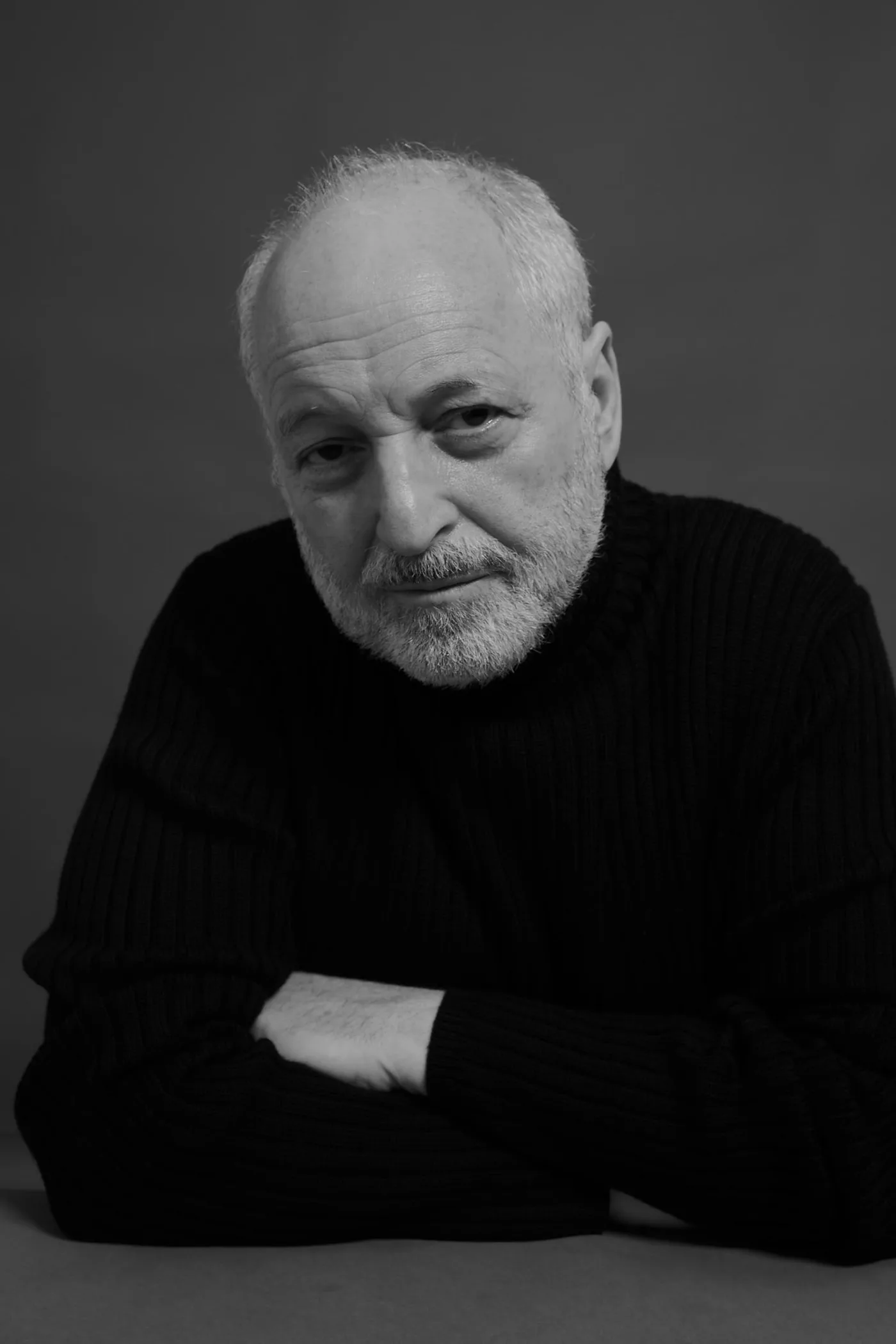
Photo · Christopher Ferguson
Subject
André Aciman
Author · Distinguished Professor
CUNY Graduate Center
André Aciman is the author of Call Me By Your Name, the novel that became Luca Guadagnino's Academy Award–winning film. His work — including Out of Egypt, Eight White Nights, and Find Me — is concerned with desire, memory, and the ambivalence at the heart of longing. A Distinguished Professor at the CUNY Graduate Center, Aciman writes with the precision of someone who understands that the most honest endings refuse resolution.
In the wake of Luca Guadagnino's Academy Award–winning adaptation, Damon King sat down with André Aciman to discuss what comes next — the shape of a sequel not yet written, the AIDS crisis hovering at its edges, and why Aciman insists the story of Elio and Oliver has never been finished. A conversation about desire, ambivalence, and the endings that refuse to close.
There are so many people who read this book, watched the movie, had an experience with your work — I think because you give desire serious consideration in literature in ways other authors don't. Are there other books that tell this story?
There were some books that did tell the story but I think for most people — and it's hard for me to say what it is that they reacted to precisely because they don't know and they never tell me when I ask — what the book does is open up a space. The sentences are long, the scenes are quite extended, and I think what they learn to see in it is a degree of intimacy that they have had in life in very scattered ways. It allows people to say, "Yes, I've known this all my life. Why was it that I never was able to formulate it before?"
It's such an extended moment of absolute introspection and intimacy with other people — a whole analysis of desire without being academic or clinical.
How much of a say did you have in the film?
Oh, I could've had a lot of say had I wanted to. I just didn't think it would help anything if the author keeps intruding on what is in the hands of people who know everything about production. I had a screenwriter who was based in the business and a director who was also the inheritor of the tradition of Luchino Visconti. What was I going to tell them, how to film? So I decided to shut up and just let them do what they wanted.
And you're happy with the result?
Yes, very, very, very happy. I love the movie. I've seen it too many times, and now whenever I walk in to do a post-screening talk, I usually arrive at the moment when the father's having the conversation with the son, and then that long extended moment when Timothée is staring into the camera, and I think it's just fabulous.
Had you envisioned a sequel before Guadagnino expressed interest?
No, I didn't, but I think it's a sexy idea and it's interesting. I like the idea. The book itself has their meeting fifteen, twenty years later, so the story doesn't end where the film ends. I don't think it will take shape for another few years because he is busy doing other things, but it's a nice way to avoid closure and I hate closure to begin with.
Are there particular things, story-wise, you could share about the sequel?
We're interested in the fact that there's an AIDS crisis going on as these two kids are maturing, and of course, one gets sort of shoved to the side. He wants to discuss that. But he is like me — we're truly abstract — and so he wants to touch on it but he doesn't want to make it an AIDS film, because that will take the whole thing away from where it was and where it was headed. I created it and I think he followed through with a story that is simply in a kind of erotic utopia. That has to work.
So there might be a happy ending?
Oh, there might be a happy ending. I like a happy ending. There is a happy ending at the end of the book itself except nobody sees it — everybody thinks that they're preparing to say goodbye forever. It's absolutely not that. Oliver comes back and he may have arranged to stay forever. We don't know.
But I imagine in your head there is a world where they're together and a world where they're not?
Both are totally plausible, yes.
The truth for you, though, lies where?
Oh, the truth for me lies not in their being together or not together, but in considering the possibilities of both things — because that's where my mind goes. I always end my books in the conditional mood so it's always sort of a psychological ambivalence on my part. I don't want to resolve it. Let the reader decide where they are going. Let circumstances dictate. I don't want to be the one to tell you what is going to happen to them for the rest of their lives. My books end with a valediction to the reader. You take it where you want.
When you consider the love of Elio and Oliver — it's never going to go away. And maybe Oliver was looking for a friendship, but at the very end, Oliver is the one who comes and visits him. And it's not out of friendship.
I can't tell you how many people begged me to ask you for a happy ending with the sequel.
You know what? It would make me very happy to make them happy. If this is where Luca wants to go, I think it makes sense. When you consider the love of Elio and Oliver, I think it's fair to say it's never going to go away. And the indication that it's there to stay is in a scene at the very end of the book when they meet again at the college and Oliver says, "Why don't you come and have dinner at my house? You'll meet my wife, you'll meet my kids," and Elio says, "No, I can't," and in his inability to say yes, what he's really saying is: I'm still connected. I'm still hooked up to the thing that we had and this is going to interfere with that. This is going to ruin the picture. And maybe Oliver was looking for a friendship — but at the very end, Oliver is the one who comes and visits him. And it's not out of friendship.